
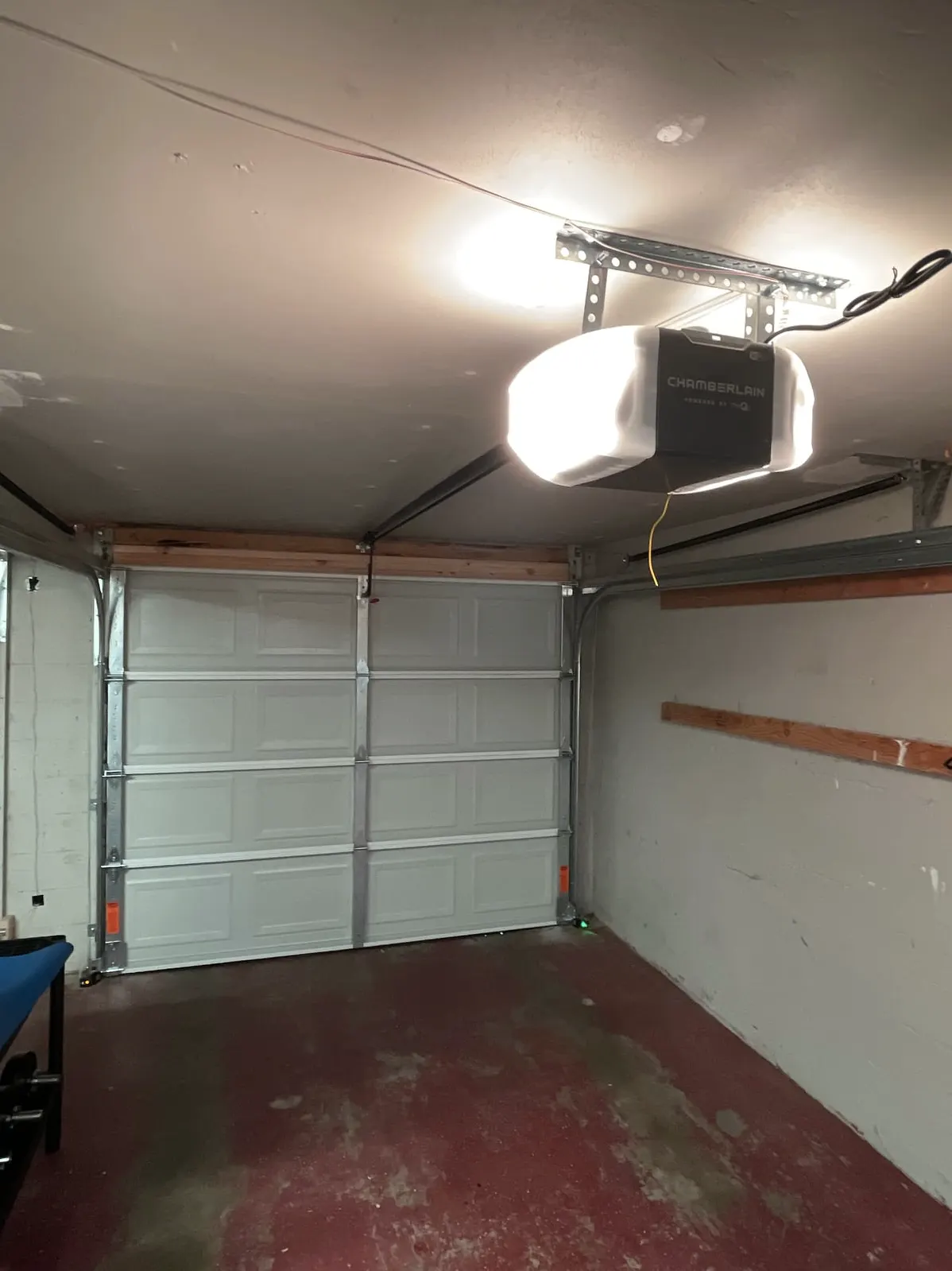
The Mistake Almost Everyone Makes First
Here's how the argument usually starts: the power goes out during an afternoon storm, and one person says, "Don't worry, the garage door has battery backup," while the other heads straight for the manual release cord. Both are half right, and that's exactly why this fight keeps happening.
The tempting mistake is assuming every garage door opener comes with battery backup built in, especially if it's newer or has a smartphone app. Manufacturers lean hard on words like "smart," "standby," and "always connected" in their marketing, so it's easy to assume the battery part is just included. Sometimes it is. Sometimes it's an add-on battery pack you never bought. The only way to know for sure is to check your specific unit, not guess based on how fancy it looks.
What Battery Backup Actually Does
A battery backup system is a small rechargeable battery pack built into or attached to the opener motor unit itself. When grid power drops, the battery kicks in automatically and lets the opener keep running — usually good for a limited number of open-and-close cycles, often somewhere in the range of 20 to 50 cycles before it needs the power grid back to recharge.
What it does not do is power anything else in your garage or house. It won't run your garage lights, your freezer, or your WiFi router. It's there for one job: letting the opener itself keep opening and closing the door when the power is out, so you can get the car in or out during a storm without fumbling in the dark.
Manual Release vs. Battery Backup: Two Different Tools
This is the part that actually ends the argument. The red emergency release cord hanging from the trolley is a completely separate system. It disconnects the door from the opener's drive mechanism so you can lift the door by hand, with zero power and zero battery involved. It always works, as long as the springs are in good shape.
Battery backup is for convenience and automatic operation during an outage. If your opener has a working battery backup, you don't need to touch the manual release when the power blinks off — the opener just keeps doing its job. If the battery is dead, missing, or your opener never had one, the manual release is your only option until power returns.
- Manual release: physical, mechanical, no electricity needed, works every time if springs and cables are healthy.
- Battery backup: electrical, limited number of cycles, needs to be charged and in good condition to work when you need it.
Is Battery Backup Actually Required?
In recent years, most new residential openers sold in the U.S. are built to meet updated entrapment-protection safety standards. In practice, that means many current models either include a battery backup system as standard or pair a secondary sensor system to meet the same safety requirement. If you bought your opener recently, there's a decent chance it has backup capability whether or not you've ever used it. Older openers, especially anything installed more than eight or ten years ago, very likely don't have it at all.
Why It Matters More Here
In this part of Florida, power outages tied to hurricane season and sudden afternoon storms aren't rare events, they're a seasonal reality. A battery backup smooths over those short outages so you're not stuck with the door half open during a downpour or unable to pull the car in before the next band of rain hits.
But heat and humidity work against the battery itself. Garages here regularly sit well above outdoor temperatures in summer, and that kind of sustained heat shortens the working life of most rechargeable battery packs. Add in salt air if you're closer to the coast, and corrosion on battery terminals or connection points becomes a real possibility too. A backup battery that worked fine two summers ago may be down to a fraction of its original capacity now, and you won't know until the power actually goes out.
How to Check Yours
- Look at the opener unit itself for a battery compartment or an attached backup pack; check the manual or a photo of the model number if you're not sure.
- On a calm, dry day, unplug the opener from the wall outlet and try the remote. If the door still opens and closes, the backup is working.
- Watch for warning signs: a slower-than-usual door, a chirping or beeping sound from the unit, or an indicator light that stays red or amber instead of green.
- If the battery is more than two to three years old and you've never tested it, assume it needs attention before the next big storm rolls through.
When to Call Mango Garage Door Service
If you're not sure whether your opener has battery backup, if the battery test above fails, or if you're overdue for a new opener altogether, that's a conversation worth having before storm season catches you off guard rather than during it. Our Garage Door Opener Installation service can get you set up with a unit that has reliable backup capability built in, and our Garage Door Tune-Up & Maintenance visits include checking battery condition, terminal corrosion, and overall opener performance so you're not finding out it's dead the moment the power goes out.
If you're in Mango, Brandon, Seffner, Thonotosassa, Valrico, Plant City, Temple Terrace, or Tampa and want a straight answer about your opener's backup situation, give Mango Garage Door Service a call. We'll check it, test it, and tell you plainly whether you need a fix or you're already covered.