
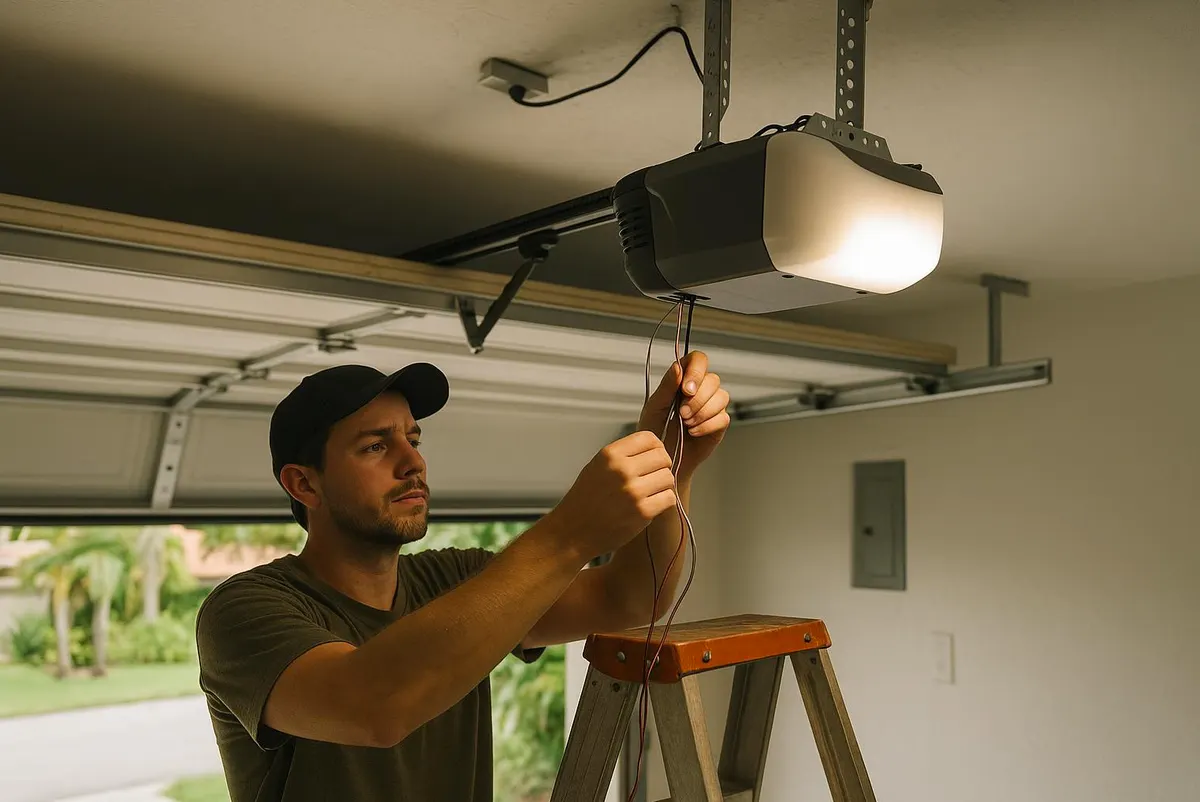
A typical call this time of year starts the same way: the door has been working fine all summer, and now it's grinding, sagging on one side, or catching halfway up the track. Nine times out of ten, a quick look shows rust forming on the rollers and bottom bracket, a panel that's swollen slightly from months of humidity, or hardware that's worked loose from the vibration of near-daily afternoon storms. It's not failure out of nowhere — it's the accumulated wear of a hot, wet Florida summer finally showing up.
Why Fall Is the Real Garage Door Season in Mango, FL
Homeowners who move here from colder states often think of "winterizing" as insulating against freezing temps and ice. That's not what matters in East Hillsborough County. What matters is that we're coming off hurricane season and heavy afternoon downpours, heading into a stretch of milder, drier weather. That transition is actually the best window of the year to inspect a garage door, because any damage from wind-load stress, driving rain, or trapped moisture is still fresh and easy to spot — before it turns into a stuck door or a snapped spring in the middle of a workday.
What Summer Storms Leave Behind
Wind-rated garage doors are built to flex and resist pressure during storms, but that doesn't mean they come through unscathed. Repeated gusts can loosen track brackets, strain hinges, and put extra stress on springs that are already working overtime to lift a heavier, storm-rated door. Add in salt air if you're closer to the coast, and you've got a recipe for rust on springs, tracks, and rollers that wouldn't show up nearly as fast in a drier climate.
Check for Storm and Moisture Damage While It's Fresh
Walk the outside and inside of the door and look for:
- Rust spots on the torsion spring, hinges, rollers, or the bottom bracket — a common result of months of humidity and rain exposure.
- Swollen or warped panels, especially on wood or composite doors that have soaked up moisture; these often show as a door that no longer sits flush or seals properly at the bottom.
- Loose track brackets or hinges, which can happen gradually from wind vibration during storm season and show up as a door that shudders or wobbles as it moves.
- Frayed or rusted cables, which carry real tension and are more dangerous to ignore than almost anything else on the door.
None of this requires a storm to have hit directly — ordinary wind-load stress and sustained humidity over a season is enough.
Give Springs and Cables Their Due
Torsion and extension springs lose a bit of tension and lubrication every time they're exposed to heat and moisture cycles, and Tampa-area summers put them through plenty of both. A spring that's rusted or under-lubricated has to work harder to lift the door, which puts more strain on the opener and cables too. If you've noticed the door feels heavier when lifted manually, or the opener strains and makes a louder motor noise than it used to, that's often a spring losing its tension rather than an opener problem. Springs are under high tension and are not a DIY repair — this is one of the few garage door jobs where it's worth paying for a technician every time.
Tighten Up the Opener and Safety Sensors
Humidity doesn't just affect metal and wood — it can creep into opener wiring and sensor housings too. Before the drier months settle in, it's worth checking that:
- The photo-eye sensors near the bottom of the track are clean, properly aligned, and free of condensation or corrosion.
- The opener's auto-reverse feature still works when you test it with a block of wood on the ground.
- Any battery backup on the opener (important heading into another hurricane season next year) is holding a charge.
- Weatherstripping along the bottom and sides of the door hasn't cracked or pulled away, since that's often the first thing to fail after a summer of heat and rain.
Small Jobs Worth Doing Before the Cooler Months Settle In
- Lubricate rollers, hinges, and the torsion spring with a silicone-based garage door lubricant — not WD-40, which doesn't hold up well in humid conditions.
- Clean built-up grime and pollen out of the tracks, which collects fast during rainy season.
- Tighten any bolts or brackets that have worked loose; a wrench and ten minutes is often all it takes.
- Check the balance of the door by disconnecting the opener and lifting it halfway by hand — it should stay in place, not slam down or shoot up.
When to Call Mango Garage Door Service
If the door is making grinding noises, sagging to one side, or you spot rust on the spring or frayed cable, that's past the point of a DIY fix. Our team handles Garage Door Spring Repair and Garage Door Cable Repair regularly this time of year, replacing worn hardware before it fails completely rather than after. We also run full Garage Door Tune-Up & Maintenance visits that cover lubrication, balance checks, sensor alignment, and hardware tightening in one trip — the kind of once-a-year service that catches small issues before they turn into an off-track door or a broken spring at the worst possible time.
If your garage door has been through a rough summer in Mango, Brandon, Seffner, Thonotosassa, Valrico, Plant City, Temple Terrace, or Tampa, give Mango Garage Door Service a call. We'll get it inspected, tuned up, and ready for the calmer months ahead — on time, done right, at a fair price.