
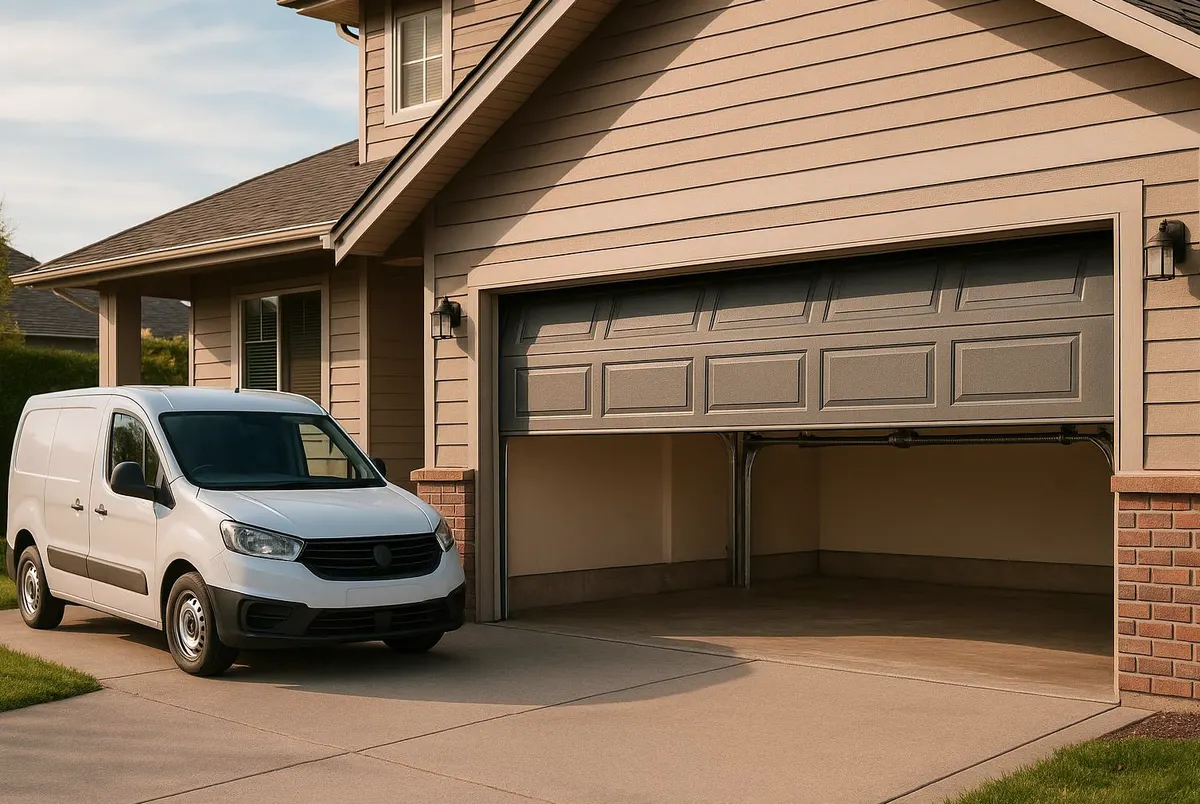
What a Technician Sees After a Big Blow
The calls usually come in the day after a storm front rolls through Hillsborough County. A homeowner walks out to the garage and finds the door bowed inward like a sail, one or two panels creased, or the whole door popped off its tracks. Sometimes the door looks fine from the street but the rollers have jumped the track and the opener is grinding against resistance. In almost every case, the pattern is the same: wind got under the bottom seal or pushed against the face of the door until something gave, usually a track bracket or a thin, unreinforced panel.
Why the Garage Door Is the Weakest Wall in the House
A garage door is the largest moving opening in most homes, and it is held in place by hardware, not by the kind of solid framing that surrounds a window or a front door. When wind pressure builds against a house, every wall and window is sharing the load except the garage door, which is really just a big panel hanging on tracks and rollers. If that door fails during a storm, wind rushes into the garage and pushes up on the roof from the inside. That is how a failed garage door turns a bad storm into a much more expensive one, and it is why wind-load-rated doors and hardware matter so much in this part of Florida.
Older doors, or doors that were never upgraded after installation, often lack the reinforcement struts and heavier-gauge track needed to resist sustained wind. If your home was built or your door was installed before wind codes were tightened, it is worth having that checked rather than assuming the door that came with the house is storm-ready.
What Humidity and Salt Air Do Between Storms
Even when there is no named storm in the forecast, the daily conditions here are hard on garage doors. Heat and humidity cause wood and some composite panels to swell slightly, which can bind a door in its tracks or keep it from seating fully against the weatherstripping. Homes closer to the coast deal with salt air that accelerates rust on springs, hinges, and track bolts. A door that is already a little rusty or a little misaligned from swelling is in much worse shape to handle 60 or 70 mph gusts than one that has been properly maintained.
A Pre-Storm Inspection You Can Do Yourself
- Check the tracks for rust and alignment. Run a hand along the vertical tracks. Flaking rust or a track that has pulled slightly away from the wall is a sign the mounting hardware needs attention before wind puts real load on it.
- Test the rollers. Open and close the door manually if you can. Grinding, sticking, or a roller that looks worn down to the metal core should be replaced, not ignored.
- Look at the panels for soft spots or separation. Press gently along seams, especially near the bottom. Swelling, bubbling paint, or gaps between panels point to water getting in.
- Inspect the springs and cables. Rust, fraying, or visible gaps in the coils are warning signs. Springs and cables under tension are also the most dangerous parts to work on, so this is one to flag for a technician rather than handle yourself.
- Tighten hardware. Vibration from daily use loosens hinge bolts and track brackets over time. A quarter-turn with a socket wrench on visible bolts can tighten up a door that has gotten a little sloppy.
- Check the bottom seal. A cracked or flattened weatherstrip lets wind-driven rain in during the heavy afternoon downpours that are routine here, and it is also the first place wind finds a gap to push through.
Before a Storm Actually Hits
- Close and latch the door securely; do not leave it partially open for ventilation.
- If your opener has a battery backup, make sure it is charged, since power often goes out before or during the worst of the wind.
- Know where the manual release cord is in case you lose power and need to move the door by hand.
- Clear gutters and downspouts near the garage so runoff does not pool against the bottom of the door.
- If you have temporary bracing kits rated for your door, install them ahead of a confirmed storm track rather than waiting until the last minute.
When to Call Mango Garage Door Service
If your door is sticking, misaligned, rattling more than usual, or you can see rust building up on the hardware, that is the time for a Garage Door Tune-Up & Maintenance visit, not a wait-and-see approach. We check spring tension, roller and track condition, hinge wear, and weatherstripping, and we tighten or replace what is worn before it becomes a failure point in high wind. If a door has already come off its tracks or taken storm damage, our Off Track Door Repair service gets it back on course and checks for bent track or damaged rollers that caused the problem in the first place, so it does not happen again on the next system.
Serving Mango, Brandon, Seffner, Thonotosassa, Valrico, Plant City, Temple Terrace, and Tampa, Mango Garage Door Service shows up on time and gives you a straight answer about what your door needs before the next front moves through. If you want your garage door checked out before storm season winds down, call us for same-day service in Mango, FL.